A Practical Guide for Amazon Sellers on Finding Reviewers
Written by

Cosmy
AI-driven eCommerce Optimization
Getting honest feedback from real customers is a cornerstone of a successful Amazon strategy. The goal is to build trust and improve your product's ranking with feedback from actual buyers and members of Amazon's approved programs. Always choose quality over quantity. A few detailed, honest reviews from legitimate sources like Amazon Vine or your own customer base are more powerful than hundreds of generic ones.
Why Quality Reviews Are Your Greatest Asset on Amazon
We all do it. Before clicking "Add to Cart," we check the star rating and read customer comments. It's natural to seek a second opinion.
On Amazon, reviews are more than just customer feedback. They are a direct line to the platform's search algorithm—the system that decides which products shoppers see.
Every authentic, detailed review signals to Amazon that your product is relevant, high-quality, and satisfying customers. This signal creates a ripple effect across the marketplace.
The Algorithm and The Buyer
Think of each thoughtful review as a vote of confidence. When a shopper finds comments that explain how a product is used, its real-world quality, and its unique benefits, they are more likely to buy. This increase in conversion rate is exactly what Amazon's algorithm looks for.
A product with ten descriptive reviews that answer potential customer questions will often outperform a competitor with thousands of vague, one-sentence ratings. This is because quality feedback impacts two key areas:
Organic Ranking: The algorithm boosts products that provide a great customer experience, pushing them higher in search results.
Buy Box Eligibility: A strong review profile is a major trust signal, and trust is a huge factor in winning the Buy Box.
Gaining an Edge in Competitive Markets
In crowded product categories, reviews can be your most effective competitive tool. For example, in the Amazon India marketplace, reviews heavily influence buying decisions. Some categories, like phone cases, are oversaturated with reviews, forcing sellers into price wars that decimate profits.
Conversely, there are emerging niches like sustainable home goods or specialized pet care where many products have fewer than 200 reviews. This presents an opportunity for sellers who can secure high-quality feedback early on.
In a marketplace where users see thousands of products daily and compete with nearly two million other active sellers, strong signals from reviewers help you stand out. You can find more data on how reviews impact the marketplace on Ad Badger's blog.
The bottom line is simple: a smart, rule-abiding review strategy is not just a marketing task. It's essential for sustainable growth on the world's largest online marketplace.
Ultimately, investing effort in acquiring genuine reviewers for Amazon builds your product’s long-term credibility and visibility. It shows both shoppers and the algorithm that your product is worth their attention.
How to Find Reviewers Without Breaking Amazon's Rules
Finding people to review your products on Amazon can feel like a minefield. One wrong step could lead to an account suspension. The key is to use methods that are both effective and 100% compliant with Amazon's strict guidelines. It’s all about building a foundation of genuine feedback, not taking risky shortcuts.
The most direct—and safest—method is Amazon Vine. This is an invitation-only program that connects sellers with a select group of Amazon's most trusted reviewers, called Vine Voices. You provide the product for free, and they write an honest, unbiased review.
This isn’t just about getting a review; it’s about getting detailed feedback that helps drive sales.
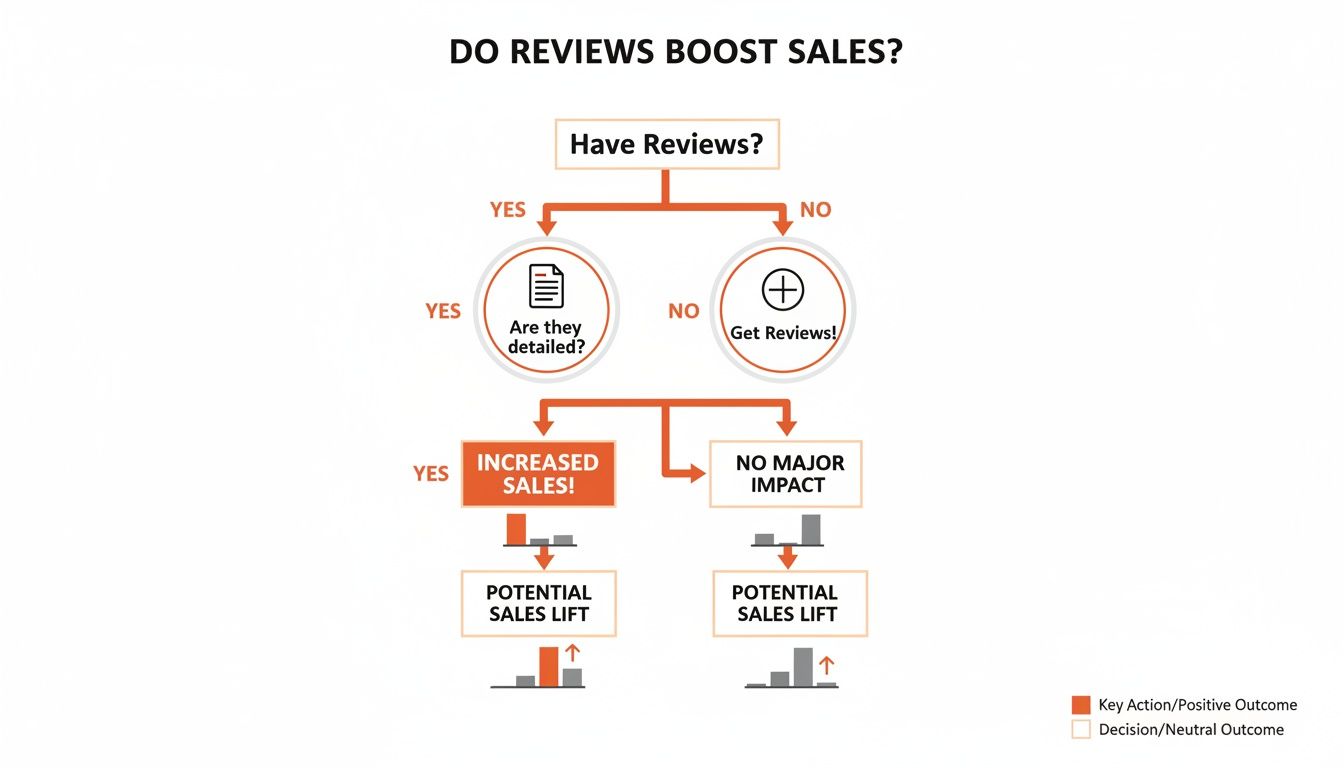
As the chart shows, collecting reviews is just the first step. High-quality, detailed feedback is what persuades a hesitant shopper to make a purchase.
Comparing Methods for Finding Amazon Reviewers
Let's look at the different ways to find reviewers. There are official channels, third-party services, and organic methods, each with its own risks and rewards. This table breaks down the common approaches.
Method | Pros | Cons | Amazon Policy Compliance Level |
|---|---|---|---|
Amazon Vine | High-quality, detailed reviews from vetted "Vine Voices." 100% policy compliant. | Can be expensive (fees apply per product). Reviews are honest; a 5-star rating is not guaranteed. | High |
Your Own Audience (Email/Social) | Connects with people who already know and trust your brand. Cost-effective. | Requires an existing off-Amazon presence. Wording must be careful to avoid incentivizing reviews. | High (if done correctly) |
Third-Party Reviewer Sites | Access to a large pool of reviewers looking for products. | High risk of policy violations. Many of these sites operate in a gray area or are explicitly banned. | Low (Extremely Risky) |
Influencer Outreach | Can generate authentic content and social proof in addition to a review. | Time-consuming to find the right people. No guarantee they will leave a review on Amazon. | Medium to High (depends on outreach method) |
The takeaway is clear: sticking to official programs like Vine and ethically engaging your own customers are the only sustainable, long-term strategies. Using third-party services is a gamble most sellers can't afford to take.
Using Amazon Vine
Enrolling a product in Vine costs money—you pay a fee for each product you submit for review—but the investment often pays for itself. You are placing your product in the hands of people known for leaving thoughtful, detailed feedback. This is especially useful for new product launches, as it helps you get those crucial first reviews to build credibility and start generating sales.
But Vine is not a magic solution. You have no influence over the reviews. If your product has a flaw, Vine Voices will find it and write about it. This makes it an excellent tool for honest feedback but a poor choice for products that are not ready for public scrutiny.
Compliance Check With Amazon Vine, you provide the product, and Amazon handles the rest. You are never allowed to contact a Vine Voice about their review. Any attempt to influence their feedback is a serious policy violation that can get you removed from the program and put your seller account at risk.
Building Your Own Reviewer Base
Beyond Amazon's official program, you can ethically build a pool of reviewers from your own audience. The best way is to cultivate an email list from customers who buy from your website or follow your brand on social media. These are people who already know your brand and are more likely to be interested in your new products.
When you launch a new product on Amazon, send them an email. You could offer a limited-time launch discount to generate interest. We cover some great ways to structure these promotions in our guide to using coupons on Amazon. The key is how you frame it: you are informing them about a new product, not demanding a review in exchange for a discount.
Another solid strategy is to collaborate with niche content creators on platforms like YouTube or Instagram. These creators have built trust with their audiences, and their endorsement can be very powerful.
Your outreach should focus on building a genuine relationship. Send them your product with no strings attached. Let them know you'd be thrilled if they enjoyed it enough to share it with their audience, but don't pressure them. This approach respects their creative freedom and keeps you safely within Amazon's rules.
So you've found a list of people who might review your products. That was the easy part. The real work is figuring out who is a good fit and reaching out without sounding like a robot, desperate, or—worst of all—like you're breaking the rules.
A clumsy outreach message or a poorly chosen reviewer can backfire. You’re not just chasing a star rating; you're building credibility for your product. The right people give you feedback that helps future customers and provides valuable insights for your own product development.

What to Look for in a Potential Reviewer
Before writing an email, do some research. Look at a potential reviewer’s public profile and review history. This isn't about being nosy; it's about making sure their style aligns with your brand's commitment to authenticity.
Here’s a quick checklist to follow:
Depth and Detail: Do they write more than "Great product"? Look for people who explain why they gave a certain rating. They discuss features, how they used the product, and their experience.
Niche Alignment: Check the types of products they usually review. If you sell a high-end coffee grinder, someone who consistently reviews premium kitchen gadgets is a good match. A reviewer focused on budget phone cases is probably not the right person.
Authenticity and Tone: Does their writing seem genuine? A profile with only glowing five-star reviews or, on the other hand, only one-star complaints can be a red flag. You want to see a balanced history.
Profile Consistency: A healthy review history shows activity spread out over time, not a sudden burst of 50 reviews in one week. This suggests it's a real person sharing experiences as they happen.
A great reviewer profile tells a story. It shows a genuine interest in helping other shoppers. Those are the people you want associated with your brand.
Crafting Your Outreach Message
Once you've found a few promising candidates, it's time to connect. Whether you’re reaching out to a micro-influencer or a loyal customer, your message must be worded carefully to comply with Amazon’s policies.
The golden rule is: Never ask for a review in exchange for a product.
Template for a Micro-Influencer
This approach works well for creators on platforms like Instagram, TikTok, or YouTube who are active in your niche.
Subject: A Question About Your Thoughts on [Product Category]
Hi [Influencer Name],
My name is [Your Name] from [Your Brand]. I've been following your [YouTube channel/Instagram] for a while and enjoyed your recent video on [Specific Topic].
We just launched a new [Product Name] that we’re very proud of. Based on your expertise in [Their Niche], we thought you might be interested in trying it out. We’d be happy to send one to you, with no obligation to post about it.
Let me know if you are interested.
Best, [Your Name]
Template for an Existing Customer
Use this for people on your email list who have bought from you before. This audience already has a positive connection with your brand. An ASIN can be a useful way to reference products internally. If you want to get more technical, you can check out our guide on how to perform an Amazon search by ASIN.
Subject: A Gift for Being One of Our Valued Customers
Hi [Customer Name],
Thank you for being a loyal customer of [Your Brand]. We really appreciate your support.
To show our appreciation, we’d like to send you our newest product, the [Product Name], as a complimentary gift. There are no strings attached—we just wanted you to be one of the first to try it.
If you’re interested, please reply to this email to confirm your shipping address.
All the best, [Your Name]
Notice the pattern? Both templates offer the product as a gift, separating the offer from any expectation of a review. This approach respects the reviewer's autonomy and keeps your strategy within Amazon's guidelines. It helps you build genuine relationships that may lead to the honest feedback you need.
Turning Reviewer Feedback into Business Insights
Getting a steady stream of reviews is just the beginning. The real value comes when you treat feedback as a direct line to your customers' thoughts. Every review is a piece of data that can guide your product development, improve your marketing copy, and help you build a better business.
This mindset transforms your reviewers from one-time contributors into a long-term source of intelligence. When you build these relationships ethically (with no payment or pressure), you create a valuable feedback loop. You can share news about product updates or new launches without asking for another review, keeping your communication helpful and compliant.
Spotting Patterns in Customer Feedback
First, look past individual star ratings and search for recurring themes. Are multiple people mentioning the same unexpected benefit? Do you see a few complaints that the product is smaller than it appears in photos? These are not just isolated opinions; they are patterns that point to something important.
For example, say you sell a kitchen gadget, and three different reviewers mention it’s "surprisingly easy to clean." That's a powerful selling point you might have overlooked. That exact phrase should be added to your bullet points or A+ Content because it will resonate with new buyers more than a generic list of features.
Turning Negative Feedback into Opportunities
Bad reviews can be discouraging, but they are often your most valuable source of information. They highlight product flaws, confusing instructions, or gaps between what your listing promises and what the customer receives.
When a customer points out a flaw, they are giving you a roadmap for improvement. Ignoring it is like ignoring a warning light on your car's dashboard. A proactive brand will thank the reviewer and use that insight to fix the problem.
Imagine reviewers complain that your product's battery life is shorter than advertised. That feedback can trigger several smart business decisions:
Product Improvement: Contact your manufacturer to source a better battery for the next production run.
Listing Optimization: Update your product description in Seller Central to provide a more realistic expectation of battery performance. This manages expectations and prevents future negative reviews.
Customer Service: Create a standard response to help customers with this issue, perhaps offering tips to extend battery life.
This systematic approach doesn’t just solve problems; it also uncovers new market opportunities. In the competitive Amazon India market, customer reviews are crucial. You might notice that products in the Home & Lifestyle category with fewer than 200 reviews but steady sales often indicate reliable demand with lower competition. These are often buyers in Tier-2 and Tier-3 cities.
Analyzing this kind of data helps brands find and fill gaps in the market. You can learn more about identifying these product opportunities on Amazon India. By turning feedback into intelligence, you not only improve your current products but also discover what you should sell next.
Common Mistakes That Can Jeopardize Your Amazon Account
Let's be direct: following Amazon's review policies can be tricky. But learning from others' mistakes is the quickest way to keep your business safe. The pressure to get reviews can push sellers toward risky practices, sometimes without them even realizing they are breaking the rules. Staying informed is your best defense.
One of the most common—and dangerous—errors is contacting customers outside of Amazon's approved messaging system. Some brands pull customer data to email them directly, thinking it's a clever way to ask for feedback. It's not. This is a direct violation of Amazon's terms of service and privacy policies. It's important to understand When Not to Use Lead Scraping, because using the wrong methods can put your entire account at risk.
Violations That Attract Penalties
Even seemingly minor actions can trigger warnings or a suspension. The biggest mistake is any form of incentivization. Offering gift cards, discounts, or free products in direct exchange for a review is strictly forbidden. It is the fastest way to get your account flagged.
Another common trap is trying to influence the review itself. You cannot ask for a five-star review. Using leading language like, "If you loved our product, please leave us a great review!" is a major red flag. This is an attempt to bias the feedback, and Amazon's systems are designed to detect it.
Other major violations include:
Reviewing your own products or having family and employees do it.
Writing negative reviews for a competitor's product from any account connected to your business.
Manipulating "Helpful" votes to artificially boost positive reviews.
Amazon's business model depends on maintaining a trustworthy platform for buyers. Any action that undermines the authenticity of reviews is seen as a threat to that trust—and they will penalize you for it.
The Consequences of Non-Compliance
The penalties for breaking these rules vary, but none are worth the risk. A first-time offense might result in the removal of the non-compliant reviews and a warning. But repeated or serious violations will lead to severe consequences.
Penalties can escalate quickly, from suppressing your product listing in search results to a temporary suspension of your selling privileges. In the worst-case scenario, Amazon will permanently shut down your account. For any legitimate brand, these outcomes are devastating.
Protecting your brand’s reputation starts with strict compliance. A great first step is to get registered. You can explore our insights on the benefits of the Amazon Brand Registry to learn more.
Your Top Questions About Amazon Reviewers, Answered
Working with Amazon reviewers can be a challenge. One wrong move could risk your account, but getting it right can transform a product's success. Let's answer some of the most common and important questions sellers have.
Can I Send a Free Product and Ask for a Review?
This is a critical question.
If you are using the official Amazon Vine program, the answer is yes. Amazon manages the entire process to ensure the reviewer provides an unbiased opinion. It is 100% compliant and the safest way to get reviews for free products.
If you do it yourself, it becomes risky. Amazon’s policy is clear: you cannot incentivize reviews. Sending a free product and suggesting a review can be seen as an incentive. The only safe way is to never make a review a condition for receiving a product. Your goal should be authentic feedback; a review is a bonus, not an obligation.
How Many Reviews Does a New Product Need?
There is no magic number, but a good launch target is 15 to 25 high-quality reviews within the first month. This is usually enough to build the trust needed to convince early shoppers and give Amazon’s algorithm the positive signals it needs to rank your product.
Remember, it’s not just about the number. The quality and timing of reviews matter more. A steady flow of detailed, authentic reviews is far better for your product's long-term health than a sudden surge of generic one-liners.
What Is the Right Way to Handle a Negative Review?
First, don't ignore it. Second, don't be defensive. Your public response is not just for the unhappy customer; it's for every potential buyer who will read it.
Always start by thanking them for their feedback, even if it seems unfair. Apologize for their negative experience and offer a way to resolve the issue offline—ask them to contact your customer service. This professional approach shows prospective customers that you stand behind your product and care about their satisfaction. It can turn a negative review into an opportunity to build trust.
Turning reviewer feedback into smart business decisions is what separates the top 1% of sellers from everyone else. Cosmy shows you exactly how Amazon’s AI sees your content, helping you find and fix the issues that are holding back your visibility and sales. See what your reviews are really telling you with a free audit at https://cosmy.ai.