Master the Amazon Buy Box: A Practical Guide for Sellers
Written by

Cosmy
AI-driven eCommerce Optimization
The Amazon Buy Box is the white box on a product page where shoppers click "Add to Cart" or "Buy Now." It seems simple, but if you're not the seller featured in that box, you're giving sales directly to a competitor.
What is the Amazon Buy Box and Why Does It Matter?
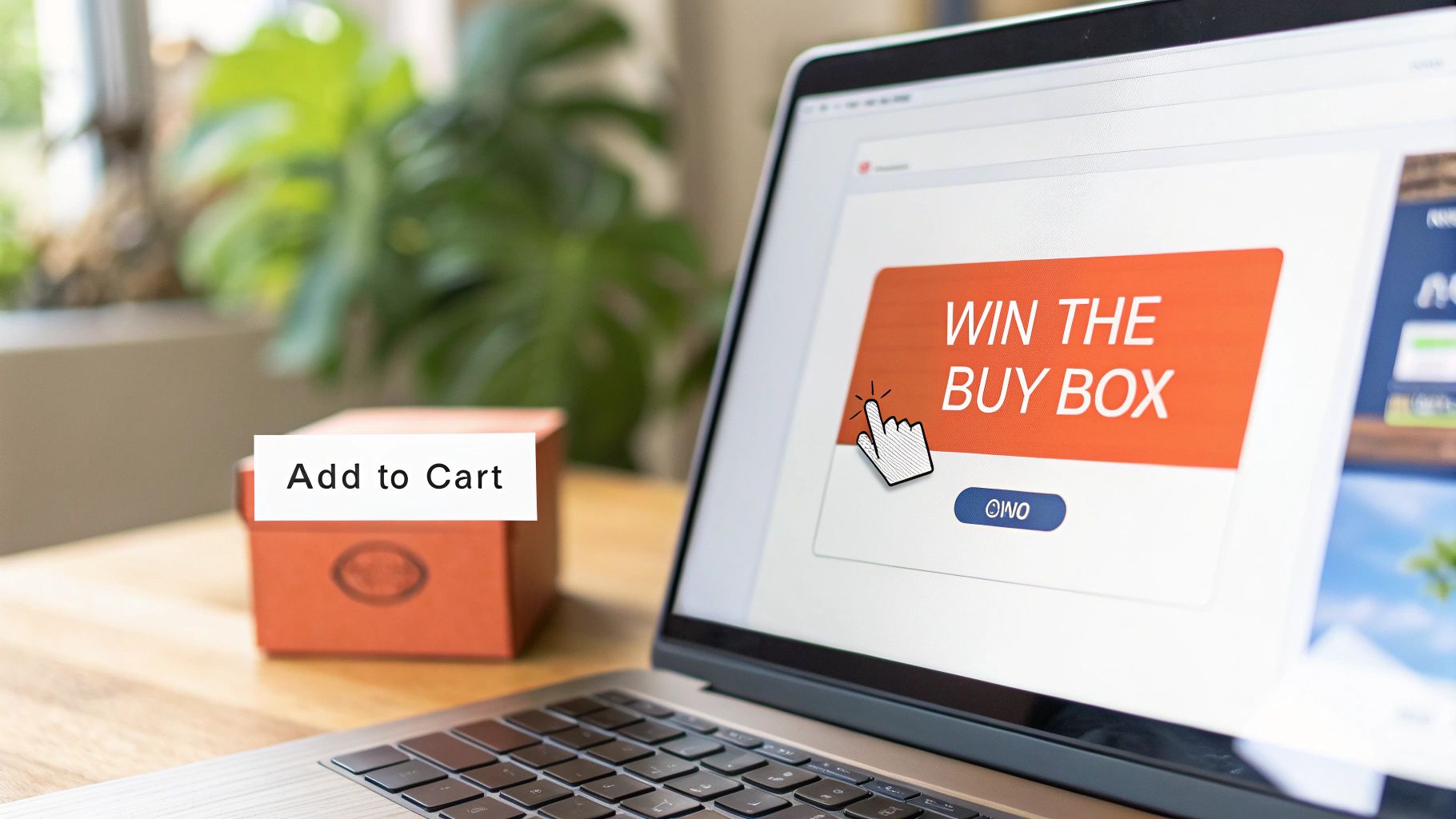
Think of the Buy Box as Amazon's recommendation. When multiple sellers offer the same product, Amazon's system doesn't pick one randomly. It gives that prime spot to the seller it trusts most to provide a great customer experience.
For shoppers, this makes buying easy. They find a product, click, and purchase. This simple process is incredibly effective, making the Buy Box one of the biggest factors for success on the platform.
The Real Impact on Your Sales
The numbers are clear: an estimated 85% of all Amazon sales happen through the Buy Box. This shows its critical importance, especially in competitive product categories.
This isn't just a number; it directly affects your revenue. For example, a seller with warehouses near Delhi might win the Buy Box 74% of the time for customers in that region. But for shoppers in Chennai, where they have no local warehouse, their win rate could drop to 18%. This shows how delivery speed can dramatically change your sales from one city to another.
Winning the Buy Box isn't just about having the lowest price. While price is a factor, Amazon’s system is more complex. It considers several factors to decide who gets the spot. Understanding these is the first step to building a winning strategy.
The Buy Box isn't a prize for the lowest price—it's a reward for being a reliable and efficient seller. Amazon's goal is a happy customer, and it features the seller most likely to deliver that.
Key Factors That Influence Your Buy Box Win Rate
To understand how the Buy Box works, you need to know what Amazon's system looks for. These factors are based on what creates a good customer experience. The table below breaks down what matters most.
Factor | What It Means for Your Store | Why Amazon Cares |
|---|---|---|
Fulfilment Method | How your products are picked, packed, and shipped. Using Fulfilment by Amazon (FBA) gives a big advantage. | Amazon trusts its own FBA service to deliver on time, ensuring customer satisfaction and keeping the Prime promise. |
Landed Price | The total cost to the customer, including the item price and any shipping fees. | Customers want a good deal. Amazon compares the total price to ensure its recommendation is competitive and clear. |
Seller Performance | Your account health, customer feedback score, order defect rate, and shipping speed. | This is your report card. Good scores prove you are a reliable seller who ships correctly and keeps customers happy. |
Getting these areas right is essential. Amazon’s system consistently rewards sellers who excel in fulfilment, pricing, and performance. A solid foundation in these fundamentals is the key to success.
For more detailed strategies, this guide on How to Win the Amazon Buy Box offers practical methods that align with this approach.
Meeting the Eligibility Requirements
Before you can win the Amazon Buy Box, you have to be eligible to compete for it. Think of this as getting a ticket to the main event. Without it, your pricing and shipping strategies don't matter. Amazon has strict standards to protect its customers, and meeting them is the first step.
The first requirement is a Professional Seller Account. An Individual plan is fine for selling a few items, but it won't make you eligible for the Buy Box. Once you have a Professional account, you can check your eligibility for any product. In Seller Central, go to the 'Manage Inventory' page and add the 'Buy Box Eligible' column. This will show a clear 'Yes' or 'No' for each of your products.
Your Account Health Report Card
If a Professional account is your ticket, your performance metrics are what you use to compete. Amazon constantly measures your reliability, and three specific metrics are critical for eligibility. These are firm requirements.
Order Defect Rate (ODR): Your ODR must stay below 1%. This metric includes negative feedback, A-to-z Guarantee claims, and credit card chargebacks. A single issue in 100 orders puts you at the 1% limit, so accuracy is key.
Cancellation Rate: This is the percentage of orders you cancel before shipping. You must keep this below 2.5%. A high cancellation rate suggests poor inventory management, which is a major red flag for Amazon.
Late Shipment Rate (LSR): This must be under 4%. Amazon's reputation is built on fast, reliable delivery. Shipping late damages customer trust and will quickly remove you from Buy Box consideration.
The path to the Buy Box is built on reliable operations. Amazon doesn't care about your great price if you can't consistently ship the correct product on time. Your metrics are the proof.
The Importance of Available Inventory
The final piece of eligibility is simple but essential: you must have the product in stock. You can't win the Buy Box for an item you don't have. The moment your inventory runs out, Amazon's system removes your offer from consideration.
This means that maintaining good stock levels is a core part of your Buy Box strategy. Frequent stockouts signal that you are unreliable and will hurt your eligibility even after you restock. Keeping a healthy supply of your products, either in your own warehouse or at an Amazon fulfilment centre, is a basic requirement to stay in the running.
Mastering Your Pricing and Fulfilment Strategy
When it comes to winning the Amazon Buy Box, pricing and fulfilment are the two most important levers you can control. This is where the daily competition is won or lost.
It's a myth that you just need the lowest price. Amazon’s system is smarter than that. It considers the Landed Price—your item price plus the shipping cost. This is the total amount the customer pays. A low item price with high shipping won't work. Transparency and total value are what matter.
Before you compete on price or shipping, you need to have your basics in order.
This chart shows that Buy Box eligibility depends on three things: a healthy professional account, strong performance metrics, and having products in stock. If these aren't solid, your pricing and fulfilment efforts won't have a chance to succeed.
Nailing Your Pricing Approach
Your pricing strategy should match the size of your business. There is no single solution; the right choice depends on your product catalogue.
For sellers with a small number of unique products—like handmade goods or a few exclusive items—manual repricing can be effective. You can watch your few competitors and adjust your landed price carefully. This hands-on method gives you control over your profit margins and lets you react to market changes without needing software.
But once you have more than a few dozen products, manual repricing becomes impossible to manage. For businesses with hundreds or thousands of items, automated repricing tools are essential. These tools connect to your Seller Central account and adjust your prices 24/7 based on rules you set. For example, you can set a rule to always be £0.01 cheaper than the current Buy Box winner or to maintain a specific profit margin.
Automation keeps you competitive at all hours, which is impossible for a person to do. For a deeper look at this topic, you can read our guide on how Amazon price history tools can inform your strategy.
The Unmistakable Power of Fulfilment by Amazon
While pricing is important, your fulfilment method is arguably the most significant factor for the Buy Box. And Amazon has a clear preference: its own service.
Using Fulfilment by Amazon (FBA) gives you a huge, immediate advantage.
With FBA, you send your inventory to Amazon's warehouses. Amazon handles storage, picking, packing, shipping, and customer service. Crucially, your products automatically become Prime-eligible, which means fast, free shipping for millions of Prime members.
Amazon's system is heavily biased towards FBA offers because it trusts its own logistics. An FBA seller can often price their product higher than a merchant-fulfilled seller and still win the Buy Box.
Consider this real-world example:
Seller A (FBA): Prices a product at £22.00 with free Prime shipping.
Seller B (FBM): Prices the same product at £19.50 + £2.99 shipping (Landed Price: £22.49).
Even though Seller A’s product costs more, they will almost certainly have the Buy Box. Amazon’s system values the guaranteed fast delivery and customer experience of FBA more than the small price difference. It knows the FBA order will arrive on time and that any issues will be handled properly.
When Merchant Fulfilment Makes Sense
Despite the advantages of FBA, fulfilling orders yourself—known as Fulfilment by Merchant (FBM)—can still be a good option. This is especially true if you sell large, heavy, or slow-moving items where FBA's long-term storage fees would be too high.
To compete for the Buy Box with FBM, your performance must be perfect. This means fast shipping times, a nearly flawless Order Defect Rate, and excellent seller feedback. There's no room for mistakes.
A more advanced strategy is Seller Fulfilled Prime (SFP). This program lets FBM sellers show the Prime badge on their listings without using FBA warehouses. It’s a great choice for businesses with their own efficient logistics that can meet Amazon’s strict two-day delivery promise. Getting into the SFP program is difficult and requires a history of excellent performance, but it offers the best of both worlds: control over your inventory and access to Prime customers.
The importance of fast delivery can't be overstated. In the Indian market, for example, delivery speed is so important that it now makes up 25% to 30% of the Buy Box calculation. This reflects the rise of "Quick Commerce" in major cities like Mumbai and Delhi, where same-day delivery is becoming standard. For brands in these areas, fast fulfilment is not just an advantage; it's a necessity. This global trend makes it clear: wherever you sell, fast and reliable delivery is key to winning the Amazon Buy Box.
Optimising Your Seller Performance Metrics
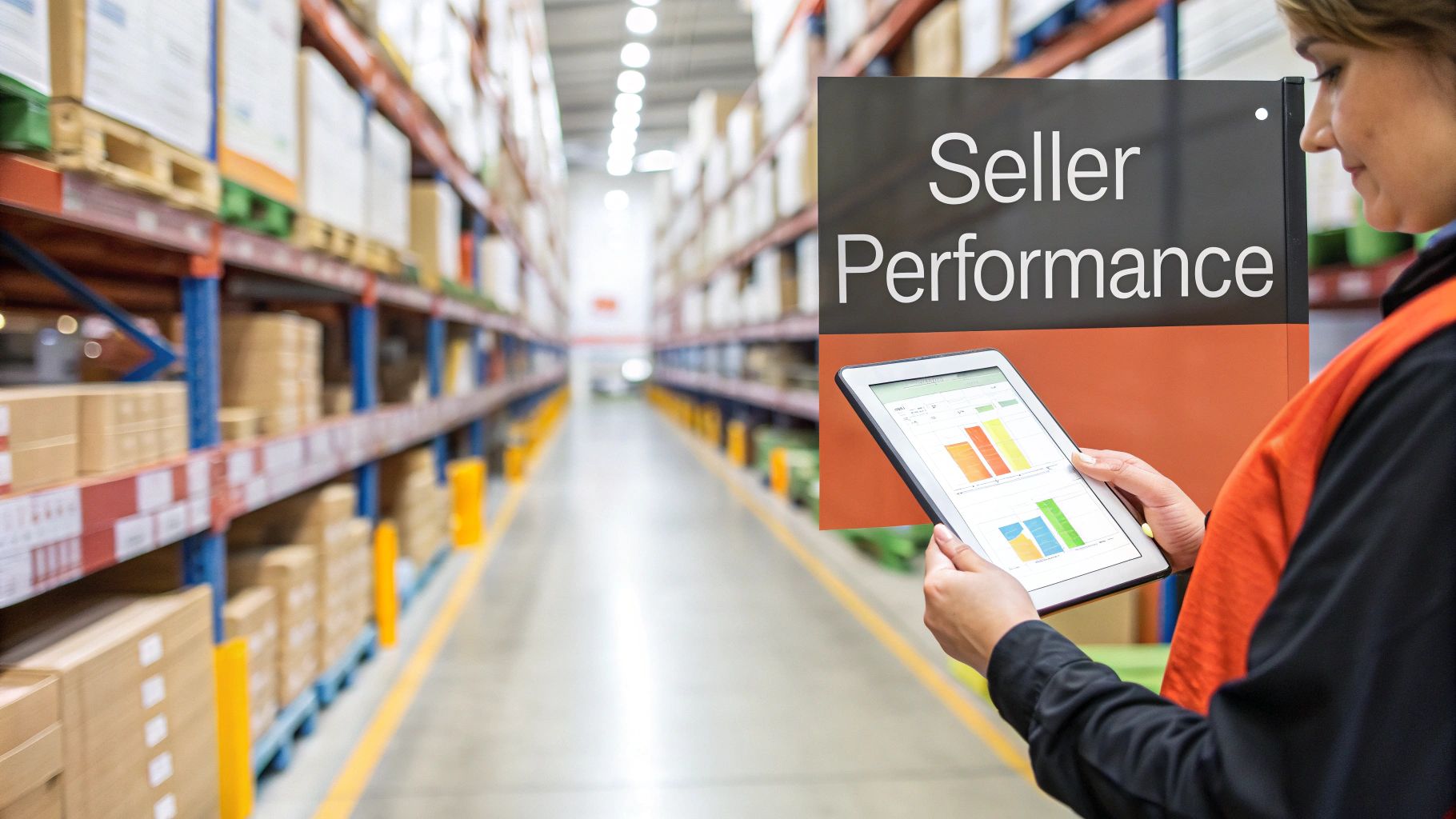
While pricing and fulfilment get you in the race for the Amazon Buy Box, your operational performance is what helps you win. When you and a competitor are matched on price and shipping speed, Amazon's system looks at your seller performance metrics to break the tie. It rewards the seller it trusts most to provide a perfect customer experience.
Think of these metrics as your reputation score with Amazon. Every order shipped on time, every customer question answered quickly, and every positive review sends a signal of reliability. These signals build trust, which leads to a higher Buy Box win rate.
Maintaining Flawless Account Health
Your Account Health dashboard in Seller Central is your report card, and the Order Defect Rate (ODR) is the most important grade. This metric combines negative feedback, A-to-z Guarantee claims, and credit card chargebacks into a single score. Your goal is simple: keep it below 1%.
Going over that 1% limit can cause you to lose Buy Box eligibility or even get your account suspended. To stay on track, you need a system for managing orders and preventing customer issues before they arise.
Accurate Listings: Ensure your product descriptions, images, and details are precise. Most returns and negative feedback happen because the product didn't match the customer's expectations.
Good Packaging: Use quality packaging that protects your products during shipping. Damaged items are a common reason for customer complaints and A-to-z claims.
Clear Communication: If a shipment will be delayed, inform the customer immediately. A proactive message can prevent a negative review.
Another area the system watches closely is your response time to customer messages. Amazon tracks how quickly you reply, and the goal is to answer every message in under 24 hours, including on weekends. This is a specific metric the system measures. Failing to meet this standard will count against you.
Your seller metrics are a record of your performance. Every transaction adds to this record, either building Amazon's confidence in you or reducing it. A perfect ODR and quick response times are essential for consistently winning the Buy Box.
The Critical Role of Inventory Management
Great customer service doesn't matter if you don't have the product to sell. Your inventory health is just as important as your performance metrics. Running out of stock is one of the most damaging things that can happen to your Buy Box chances.
When your product is out of stock, you immediately lose the Buy Box. But the problem doesn't end there. Even after you restock, it can take time to regain your previous win rate. Amazon's system values consistency, and a stockout signals unreliability.
To avoid this, you need to connect your current inventory levels, your sales rate, and future demand.
Building a Reliable Inventory Signal
Keeping healthy stock levels is more than just reordering when you're low. It’s about creating a forecast that considers seasons, promotions, and market trends. A seller who consistently manages their inventory well sends a strong signal of reliability to Amazon.
This is especially true in regional markets. For instance, Cash on Delivery (COD) is still the preferred payment method for 62% of consumers in India. Offering COD is more than a payment option; it's a signal that builds trust with local customers. The system sees sellers who enable COD as being better aligned with customer needs, which can boost their Buy Box eligibility. You can find more details on this in research about Amazon trends in India.
To master your inventory and send the right signals, focus on these key areas:
Track Sales Velocity: Monitor your daily and weekly sales for each product to understand how quickly it sells. This is the baseline for your forecast.
Know Your Lead Time: Understand exactly how long it takes for new stock to arrive from your supplier and become available for sale. Factor this into your reorder points.
Keep Safety Stock: Always maintain a buffer of inventory to handle unexpected sales spikes or supply chain delays. A small amount of safety stock is your best protection against a costly stockout.
By combining perfect order fulfilment with smart inventory planning, you show Amazon that you are a dependable seller. You become a trusted partner in Amazon's mission to satisfy customers. That is the real key to not just winning the Buy Box, but keeping it.
How to Monitor and Defend Your Buy Box Share
Winning the Amazon Buy Box isn't a one-time achievement. It’s a daily competition. Staying on top requires proactive defense, not just a reaction when your sales suddenly drop. The goal is to shift your mindset from winning the Buy Box to actively owning it.
First, you need to know your current status. Amazon provides the necessary data in Seller Central. The key report is the "Detail Page Sales and Traffic by ASIN." In that report, add the "Buy Box Percentage" column to see what share of views you are capturing for each product.
A steady decline in this percentage is your earliest warning that a competitor is gaining ground.
Identifying and Responding to Threats
Your Buy Box percentage will naturally fluctuate, but a sharp, ongoing drop on a key product is a red flag. It usually points to a specific threat. Your job is to investigate the problem and act quickly before the damage grows.
Most of the time, the cause is one of these three issues:
New Competitors: A new seller appears, undercutting your price slightly or offering faster shipping. The system may start to favor their offer. Make it a daily habit to check the "Other Sellers on Amazon" box on your product pages.
Listing Hijackers: These are unauthorized sellers who attach themselves to your branded listing, often selling low-quality or completely different products. They can destroy customer trust and steal the Buy Box with very low prices.
Counterfeit Sellers: This is the most serious threat. Counterfeiters selling fake versions of your product can lead to a flood of negative reviews and A-to-z claims, causing long-term damage to your brand.
Defending your Buy Box requires vigilance. Regularly checking your key listings for unauthorized sellers isn't being paranoid; it's essential maintenance to protect your revenue and brand.
For brands with many products, checking every listing is difficult. Tools that provide a quick overview can help. For example, a simple browser tool like the DS Amazon Quick View extension can help you scan for competitor information without clicking into every product page.
Enforcing Your Brand and Pricing Policies
When you find an unauthorized seller—especially one selling counterfeits—you need to act fast. Knowing how to use Amazon's infringement reporting system is a critical part of your defense.
The most effective way is to file a detailed report through Brand Registry, providing proof of your trademark and clear evidence of the infringement. This guide on How to File an Amazon Infringement Report explains the exact steps to get fraudulent listings removed.
Protecting your pricing is the other half of the battle. If you have a Minimum Advertised Price (MAP) policy, you must enforce it consistently. When resellers violate your MAP, it can start a price war that destroys your profit margins and makes it impossible to hold the Buy Box profitably.
The enforcement process is simple but requires discipline:
Documentation: Have a clear MAP policy that every authorized reseller has agreed to in writing.
Monitoring: Regularly check your listings to ensure everyone is following the rules.
Communication: When you find a violation, send a formal notice to the seller. Reference your agreement and explain the consequences.
Action: If the seller does not comply, you must follow through. This might mean stopping their supply of your product. If you don't, your MAP policy becomes meaningless.
Consistent monitoring and enforcement create a stable pricing environment. This protects your brand's value and strengthens your ability to hold the Buy Box over the long term.
Common Questions About the Amazon Buy Box
When selling on Amazon, certain questions about the Buy Box come up frequently. Answering them helps you make better decisions that directly affect your sales. Here are the answers to the most common questions sellers have.
Why Did I Lose the Buy Box When I Have the Lowest Price?
This is a common and frustrating question. The simple answer is that Amazon's system cares more about the best overall value for the customer than just the lowest price.
From Amazon's perspective, a competitor using Fulfilment by Amazon (FBA) guarantees fast, reliable Prime delivery. Even if their product is slightly more expensive than your merchant-fulfilled offer with a five-day shipping time, Amazon sees the FBA offer as the better customer experience. It trusts its own logistics network.
If your price is the lowest but your account health is poor or your shipping is slow, you will often lose to a competitor who excels in those other areas.
How Long Does It Take a New Seller to Become Buy Box Eligible?
There is no fixed waiting period. Eligibility is earned by proving you can handle orders and satisfy customers. Amazon gives new sellers an informal trial period, and how quickly you pass it is up to you.
Your goal is to generate sales while maintaining perfect account health. This means keeping your Order Defect Rate well below 1%, having zero late shipments, and answering all customer messages in under 24 hours.
A good shortcut is to use FBA. By letting Amazon handle your fulfilment, you borrow its reputation for reliability. This can speed up your eligibility, often within just a few weeks of your first FBA sale.
Can Multiple Sellers Share the Buy Box?
Yes, absolutely. This is a key concept to understand. The Buy Box is rarely "owned" by a single seller 24/7. It's more like a timeshare, where Amazon rotates the "win" among several qualified sellers with competitive offers.
The system scores each eligible seller on a combination of price, fulfilment, and performance. It then distributes the win time—the percentage of page views where your offer is featured—based on those scores. If you and a competitor have very similar metrics, you might have the Buy Box for 60% of the day and they might have it for the other 40%. This is why even small, consistent improvements to your metrics are so important. Reducing your handling time by one day could directly increase your share of the rotation and your total sales.
The Buy Box isn't a winner-take-all prize; it's a timeshare. Your goal is to earn the largest possible share of that time by being the most reliable and competitive offer on the listing.
Does the Buy Box Price Change Throughout the Day?
Constantly. The Buy Box winner and the price shown can change from minute to minute. This is mainly due to the common use of automated repricing software. Most serious sellers use these tools to react instantly to competitor price changes.
A price that was winning you the Buy Box this morning could be uncompetitive by the afternoon after another seller’s repricer adjusts. It's not just about price. A competitor running low on stock or having a dip in their performance metrics can also trigger a change. This is why you can't just "set it and forget it." Active monitoring and a flexible strategy are essential.
Stop guessing what Amazon’s AI wants. Cosmy audits your product listings to show you exactly how they are being perceived and ranked, turning opaque algorithms into your competitive advantage. See what signals you’re really sending with a free audit.