What an Amazon Brand Specialist Does and Why You Need One

Written by

Cosmy
AI-driven eCommerce Optimization
An Amazon Brand Specialist is responsible for your brand’s success on the world's largest online marketplace. They are the key person tasked with growing sales, improving product visibility, and protecting your brand's reputation on the platform.
What Exactly Is an Amazon Brand Specialist

Think of them as the captain of your ship in the vast Amazon ocean. They don't just steer; they set the course, manage the daily operations, and ensure everything is working correctly to reach the destination: more sales and a stronger brand.
This role requires a practical mix of marketing, data analysis, and operational skill.
Don't confuse them with a general digital marketer. A general marketer often manages campaigns across many different websites and social media platforms. In contrast, an Amazon Brand Specialist has deep, specific knowledge of Amazon’s complex system. They understand its search algorithm, advertising platform, and operational rules in detail.
The Three Pillars of Their Role
A specialist's work is built on three essential areas. Each is vital for building and maintaining success on Amazon.
Growth and Performance: This is about sales and efficiency. It includes managing advertising campaigns, reviewing sales data to find trends, and creating plans to increase revenue and market share. They constantly ask, "How can we sell more, and how can we do it more profitably?"
Content and Discoverability: This pillar focuses on making sure customers can find your products and are convinced to buy them. It covers everything from writing product titles and bullet points that show up in search results to creating engaging A+ Content that explains what your brand is all about.
Brand Protection and Health: A major part of their job is protecting your brand’s reputation. This means finding and reporting counterfeit sellers, addressing negative reviews, and staying current with Amazon's frequent policy changes. A key part of this is using the tools available through the platform. To learn more, read our guide on how to get started with Brand Registry on Amazon.
In simple terms, an Amazon Brand Specialist manages your brand’s entire presence on the platform. They connect marketing, operations, and brand strategy to deliver measurable business results.
A Look Inside Their Daily Responsibilities

The work of an Amazon Brand Specialist is hands-on. Daily actions directly impact sales and how customers perceive your brand. Their job isn't a one-time project; it’s a continuous cycle of analysis, adjustment, and action. The goal is to turn a simple product listing into a consistent source of sales.
A core part of their day is focused on making products more visible in search results. This involves carefully studying how customers search to improve product titles, helping your product appear on the first page.
For example, a title like "Durable Backpack" is too generic and will get lost. After looking at search data, a specialist might change it to "Water-Resistant Hiking Backpack for Men, 35L Daypack with Laptop Compartment" because they know that's how real customers are searching. This single change can be the difference between being ignored and getting clicked.
Driving Conversions and Engagement
Getting a customer to click on your product is only the first step. Once they are on the product page, the specialist's job is to persuade them to buy. This is where clear and helpful content is essential.
A lot of their time is spent creating A+ Content. This feature allows them to replace a standard text description with a visually appealing layout that includes high-quality images, detailed text, and comparison charts. It’s an effective way to tell your brand’s story, highlight unique features, and answer common questions. It’s not just about looks—well-made A+ Content can increase conversion rates by up to 10%.
An Amazon Brand Specialist acts like a business manager for your brand on the platform. They connect inventory levels, advertising spend, customer reviews, and content to ensure every part of your Amazon presence works together.
They also manage the customer review and Q&A sections. This involves responding to negative feedback to reduce its impact and using positive reviews to build trust. This active engagement shows potential buyers that the brand is responsive and trustworthy.
Managing Advertising and Analysing Performance
A large part of a specialist's day is spent managing Amazon PPC (Pay-Per-Click) advertising campaigns. This is more than just setting a budget. It requires constant monitoring, testing, and fine-tuning.
Their main advertising tasks include:
Keyword Bidding: Adjusting bids on specific keywords to ensure ads are shown to the right shoppers without overspending.
Campaign Structuring: Organizing ad campaigns logically, for example by product line or customer type. This helps control spending and provides clear performance data.
Performance Analysis: Looking at key numbers like Advertising Cost of Sale (ACoS) to determine which campaigns are profitable and where to make improvements.
Their analysis doesn't stop with ads. They work within Seller Central or Vendor Central, reviewing sales reports and business data. They look for patterns, identify top-performing products, and figure out why others aren't selling as well. This data-driven approach means their decisions are based on facts, not assumptions.
To summarize, we can break down their key functions like this:
Core Functions of an Amazon Brand Specialist
This table shows the specialist's main responsibilities and how their daily work helps achieve key business goals.
Responsibility Area | Key Tasks | Business Impact |
|---|---|---|
Product Discoverability | Keyword research, title/bullet point writing, backend search term updates, category review. | Improves organic search ranking, brings in more relevant traffic, and reduces the need for paid ads. |
Content & Conversion | A+ Content creation, image updates, video management, storefront design. | Increases conversion rates, builds brand value, answers customer questions, and lowers return rates. |
Advertising Management | PPC campaign setup, bid adjustments, ACoS improvement, budget management. | Drives targeted traffic, increases sales, and makes ad spending more profitable. |
Customer Engagement | Review monitoring and responses, Q&A management, customer feedback analysis. | Builds trust with customers, addresses negative reviews, and improves brand reputation. |
Performance Analytics | Sales report analysis, inventory checks, competitor monitoring, traffic analysis. | Provides data for smart decisions, helps prevent stockouts, and identifies new market opportunities. |
Ultimately, an Amazon Brand Specialist translates complex platform data into a clear plan of action. They monitor inventory to avoid running out of stock, which can halt sales momentum. They analyze competitors to find an advantage and continuously improve every detail. Their role is a unique mix of creative marketing, careful analysis, and operational management—all focused on one thing: driving steady growth on Amazon.
The Skills That Separate a Good Specialist from a Great One
Knowing the daily tasks is one thing, but truly understanding what drives success on Amazon is another. Not all specialists are the same. A great Amazon Brand Specialist combines strong technical skills with practical soft skills that allow them to turn the platform's complexity into a competitive advantage for your brand.
This mix of abilities is what separates a simple account manager from a true strategic partner. They don't just manage listings and ads; they anticipate problems, act on opportunities, and turn large amounts of data into real business growth.
The Technical Toolbelt
First, a top specialist must be an expert with the tools of the trade. This isn't just about knowing where the buttons are; it's about understanding how to use them to achieve specific business goals.
Platform Mastery: Complete knowledge of both Seller Central and Vendor Central is essential. They need to understand the details of each platform, from creating listings and managing inventory to handling support cases and understanding performance alerts. A great specialist knows exactly how to solve problems quickly.
Data Interpretation: Amazon provides a massive amount of data in its sales and advertising reports. A good specialist can read these reports. A great one can use them to tell a story. They can look at a spreadsheet and identify why sales dropped on a specific day or which ad campaign is wasting money, turning raw numbers into an actionable plan.
PPC Expertise: A solid understanding of Amazon's PPC platform is critical. This means knowing the different campaign types, bidding strategies, and how to optimize for a target Advertising Cost of Sale (ACoS). They know, for instance, when to use a broad match keyword to discover new search terms versus when to use an exact match to target buyers ready to purchase.
The Strategic Soft Skills
Technical skills are the foundation, but soft skills are what make a specialist truly effective. The Amazon marketplace is constantly changing. The ability to adapt and think critically is what separates the best from the rest.
A truly effective Amazon Brand Specialist doesn't just react to problems. They use their problem-solving skills and adaptability to anticipate market shifts and stay one step ahead of the competition.
Imagine this: your best-selling product's main image is suddenly removed by Amazon for a policy violation. A novice might panic or wait days for a generic support response. An expert, however, will immediately identify the likely cause, prepare new compliant images, and know exactly how to escalate the case to get it resolved quickly, minimizing the impact on your sales.
This requires a specific set of soft skills:
Adaptability: Amazon’s rules and search algorithm can change without warning. A great specialist isn't frustrated by this; they see it as a challenge. They stay informed about updates and can change their strategy quickly to maintain momentum.
Problem-Solving: From suspended listings to a wave of negative reviews, problems are a normal part of selling on Amazon. A top specialist is a persistent troubleshooter who can logically identify an issue, find its root cause, and implement a solution without needing constant supervision.
Clear Communication: This role connects marketing, logistics, and leadership. A specialist must be able to clearly explain performance data to executives, coordinate with the warehouse team on inventory, and align with the broader marketing team on promotions. They act as the translator that keeps everyone on the same page.
Clear Signs It’s Time to Hire a Specialist

Recognizing you have a problem is the first step. Many brands struggle on Amazon without realizing that their issues are common problems an expert can solve. If the following points sound familiar, it’s a clear sign that your business needs a new approach.
The most obvious red flag is stagnant or declining sales. If your revenue has hit a plateau or started to drop while the market for your products is growing, something is wrong. An Amazon specialist can identify the cause, whether it's a weak keyword strategy, uncompetitive pricing, or poor product listings.
When Your Advertising Becomes a Liability
Another major indicator is an out-of-control advertising budget. Are you spending more and more on Amazon PPC with little to show for it? Your Advertising Cost of Sale (ACoS) is the key metric to watch.
If your ACoS is consistently stuck above 40%, it's a strong signal that your campaign strategy needs an expert review. A specialist will refine your targeting and bidding to stop wasting money and start driving profitable sales.
This isn't just about spending less; it's about spending smarter. An expert ensures your ad budget is an asset, not a liability.
Losing ground to competitors is another painful but revealing sign. If you see other brands consistently outranking you for your most important keywords, you're losing visibility and customers every day. A specialist will analyze what your competitors are doing, find their weaknesses, and identify opportunities for you to reclaim that critical first-page position.
This expertise is more important than ever, especially since third-party sellers now account for 61% of all sales on the platform. The marketplace is simply too competitive to navigate without a guide.
Drowning in Daily Operations
Finally, take an honest look at your team's workload. If managing inventory, responding to customer reviews, and dealing with listing issues are pulling you away from growing the business, you need help. These operational tasks are very time-consuming and require specific platform knowledge to handle well.
An Amazon brand specialist takes on this entire responsibility. This frees you up to focus on what you do best—product development and long-term strategy. If you're considering the options, understanding why hiring an expert is so valuable can be very helpful.
Ultimately, they don’t just fix problems; they build the strategy and systems you need for long-term, sustainable growth on the world’s most competitive marketplace.
How AI Tools Amplify a Specialist's Impact
Today's most effective Amazon Brand Specialist doesn't work alone. They use artificial intelligence to make faster, more accurate decisions, changing their role from a manager who reacts to problems to a strategist who plans ahead. While experience and manual analysis are still important, AI platforms act as a powerful assistant, handling complex data work in seconds.
Instead of spending hours sifting through spreadsheets to guess which keywords might work, an AI tool can analyze thousands of customer search terms instantly. It identifies the exact phrases real shoppers are using and, more importantly, reveals gaps where your competitors aren't meeting customer needs. This frees up the specialist to focus on strategy.
A specialist's work is now closely tied to technologies like AI in modern marketing that help produce creative work more efficiently. This partnership between human expertise and machine intelligence is no longer a future idea; it's a practical necessity for staying competitive.
From Manual Labour to Strategic Command
Think of it this way: a specialist without AI is like a chef trying to prepare a large meal by chopping every vegetable by hand. They can do it, but it’s slow, tiring, and leaves no time for creativity. An AI-powered platform is their professional kitchen appliance—it handles the repetitive prep work, allowing the chef to focus on creating the perfect recipe and presentation.
This shift allows the specialist to dedicate their time to more important strategic planning, such as:
Market Expansion: Finding new international markets or product categories with high demand and low competition.
Brand Narrative: Developing A+ Content and brand stories that connect with target audiences, building long-term loyalty.
Competitive Strategy: Analyzing competitor weaknesses uncovered by AI and creating campaigns to take advantage of those gaps.
This is especially important in fast-growing markets. For example, Amazon's rapid growth in India has made Brand Specialists essential in helping sellers capture a share of the platform's huge revenue. This growth is evident in Amazon Seller Services' income increasing from ₹10,847.6 crore in FY2020 to ₹16,200 crore in FY2021.
Uncovering Hidden Opportunities
An Amazon Brand Specialist using AI can find opportunities that are impossible to see with the naked eye. The right tools can analyze thousands of customer reviews, Q&A sections, and search reports to find emerging trends or common customer problems.
An AI platform doesn't replace a specialist's judgment; it improves it. It provides the data-backed evidence needed to turn a good idea into a highly profitable strategy, ensuring decisions are based on what customers are actually doing, not just on what a manager thinks they want.
For example, an AI tool might notice that a growing number of customers are asking questions about a product's compatibility with a specific accessory. A specialist can immediately use this information to update the product listing, add a new image highlighting that feature, and even inform the product development team about a potential product bundle opportunity.
This proactive approach not only increases sales but also improves customer satisfaction. To learn more about how this technology works, you can read our detailed article on AI in SEO.
Ultimately, integrating AI changes the role completely. The specialist moves from being overwhelmed by data to being empowered by it, driving faster growth and gaining a significant competitive advantage.
Finding and Measuring the Right Specialist
Finding the right Amazon Brand Specialist is a critical decision for your brand. Get it right, and you'll unlock growth. Get it wrong, and you'll waste money with little to show for it.
The interview process should go beyond a simple checklist of skills. You need to test their real-world problem-solving abilities with practical, scenario-based questions. Anyone can claim they "have experience with PPC," but can they think on their feet?
Avoid generic questions. Instead, ask something that reveals their thought process.
Example Interview Question: "Walk me through your exact process for diagnosing a sudden, unexplained sales drop on one of our key products. What data would you look at first, and what actions would you take in the first 24 hours?"
This single question tells you more than a dozen basic ones. It requires a candidate to show their analytical skills, ability to prioritize, and strategic thinking—not just repeat what's on their resume.
Setting Clear Expectations with KPIs
Once you’ve found your specialist, measuring their performance is just as important as hiring them. Vague goals lead to vague results. You need to establish clear Key Performance Indicators (KPIs) from the start. This isn't about micromanaging; it's about creating a clear path to success and ensuring a real return on your investment.
These metrics should cover all their responsibilities, from advertising efficiency to organic search visibility.
Total Advertising Cost of Sales (TACoS): This is the big-picture metric. It compares your total ad spend to your total revenue (from both ads and organic sales). A declining TACoS means your ads are not only profitable but are also boosting your overall sales.
Organic Keyword Ranking: You need to be visible on the digital shelf. Track your product’s position for your top 5-10 most important keywords. Consistent improvement here shows their SEO efforts are working, reducing your long-term reliance on paid ads.
Conversion Rate: This is the ultimate test of their ability to optimize a listing. It measures the percentage of visitors who make a purchase. A rising conversion rate means their work on A+ Content, images, and review management is persuading shoppers to buy. A high search ranking doesn't matter if no one converts.
If you want to understand more about how visibility connects to all this, our guide on understanding your Share of Voice on Amazon is a great resource.
Of course, the demand for skilled specialists affects their salary. In a competitive market like India, for example, the average annual salary for an Amazon Specialist is around ₹13 lakhs. Salaries can range from ₹10.8 lakhs for less experienced roles to as high as ₹37.9 lakhs for seasoned experts managing large accounts. You can find more salary information for Amazon specialists in India on 6figr.com.
Visualising the Specialist's Modern Role
The best specialists today use technology to increase their effectiveness. This isn’t about replacing human expertise; it's about making it more powerful.
This diagram shows how AI improves a specialist's core functions, from analysis and speed to strategy and execution.
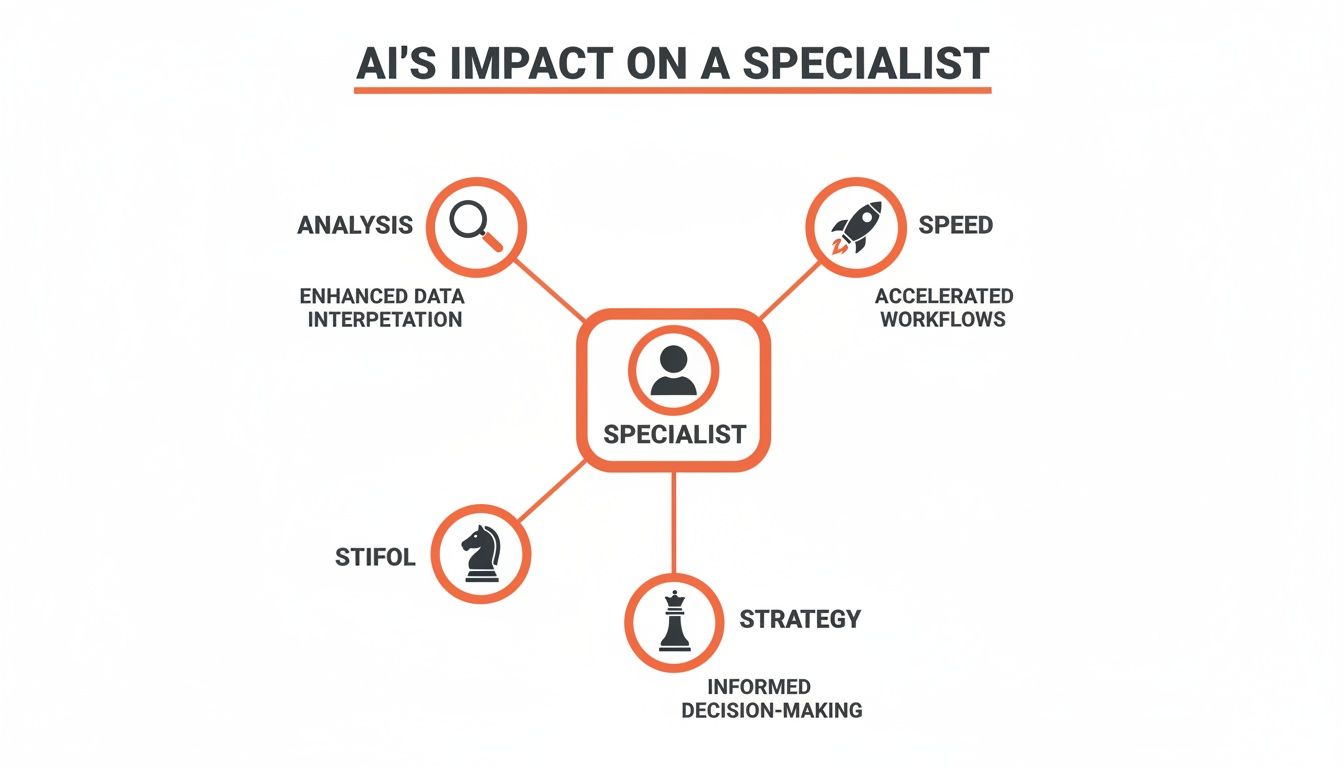
Think of it this way: AI tools automate the time-consuming data tasks, freeing up your specialist to focus on what humans do best—high-level strategy and creative problem-solving.
By setting clear KPIs from the start and hiring a professional who knows how to work with modern tools, you're not just hiring a person. You're building a powerful engine for sustainable growth.
Still Have Questions? Let's Clear Things Up.
When it comes to hiring an Amazon Brand Specialist, business leaders often have the same basic questions. Let's answer them directly so you can make the right decision for your brand.
Specialist vs. Agency: What's the Real Difference?
The biggest difference comes down to focus and involvement. An Amazon Brand Specialist, whether an employee or a dedicated freelancer, becomes an extension of your team. They get to know your brand, your products, and your company culture on a daily basis.
An agency, on the other hand, works with multiple clients. While you get access to a larger team, their attention is divided. A specialist gives your brand their full focus, which is often what’s needed to achieve significant results.
Can't We Just Handle Amazon Ourselves?
Yes, you can. Most brands start by managing their own Amazon presence, and it's a great way to learn. But as your sales increase, so does the complexity. The turning point usually arrives when your team is too busy to keep up with Amazon’s constant algorithm changes, ad management, and operational issues.
A dedicated specialist isn't just another person handling tasks; they are a strategist whose entire job is to master the Amazon platform. If your internal team is juggling too many responsibilities, you are almost certainly losing potential sales.
How Long Does It Take to See Real Results?
You will see some quick improvements almost immediately—for example, fixing suspended listings or optimizing a key ad campaign can show a difference within a few weeks. But for the type of steady growth that can transform your business, it takes more time. A good specialist should be able to show meaningful improvements in metrics like organic ranking and Total Advertising Cost of Sales (TACoS) within the first 90 days.
Think of it this way: the first few months are about building a solid foundation. They are reviewing your listings, refining your keyword strategy, and structuring ad campaigns for long-term success. Success on Amazon is a marathon, not a sprint, and that initial work is what pays off for years to come.
Ready to turn Amazon’s complex AI into your competitive advantage? Cosmy delivers the actionable intelligence you need to boost organic visibility and drive sales. Start with a free audit and see what your brand has been missing. Discover more at https://cosmy.ai.