Finding a Better Alternative for eBay in 2026

Written by

Cosmy
AI-driven eCommerce Optimization
For many online sellers, eBay was the first step. But with rising fees, stiff competition, and a model that feels outdated, it's no longer the only option.
The best alternative for eBay isn’t a single answer; it depends on what you sell and your business goals. For example, a high-volume seller of new electronics might find a better home on Amazon, while a creator of handmade jewelry will almost certainly do better on Etsy. Looking beyond eBay isn’t just about finding a replacement—it's about building a more stable and profitable business.
Is It Time to Look Beyond eBay?
eBay was a pioneer, but its one-size-fits-all approach no longer works for every seller. Relying on a single sales platform is a risky strategy. An unexpected policy update or another fee increase can hurt your profits overnight.
Selling on multiple platforms is no longer a choice; it's a necessary strategy for survival and growth. This guide offers a clear framework for deciding which platforms are right for you, focusing on the factors that truly matter to your daily operations.
Why Sellers Seek Alternatives
The search for an alternative for eBay is driven by practical business needs. Sellers are actively looking for platforms that better suit their products, customers, and financial goals.
The main reasons are straightforward:
Rising Seller Fees: eBay’s fee structure can be confusing and expensive. Final value fees, which often reach 13.25% plus a fixed fee, can significantly reduce your profit margins, especially on lower-priced items.
Finding the Right Audience: Your products might get lost on a large, general marketplace. A specialized platform, like Poshmark for secondhand fashion or Etsy for crafts, puts you directly in front of buyers who are already looking for what you sell.
Gaining Brand Control: Building a distinct brand on eBay is difficult. Sellers want more control over their store’s appearance, customer communication, and the ability to tell their own story.
Building a presence on multiple platforms makes your business more stable. If sales dip on one channel or a new competitor appears, you have other revenue streams to rely on. This approach removes the risk of having a single point of failure.
Comparing Key Platform Types
Before exploring specific platforms, it’s important to understand the different types available. Each serves a distinct strategic purpose.
Platform Type | Primary Function | Best For |
|---|---|---|
General Marketplaces | Reach a massive, diverse audience with a wide range of product categories. | Sellers with common products targeting a broad market. For example, phone cases or kitchen gadgets. |
Niche Marketplaces | Connect with a dedicated community interested in specific products. | Artisans, collectors, and sellers of specialized goods. For instance, vintage watches or handmade quilts. |
Personal Storefronts | Build and own your brand's online home with full control over design and customer data. | Businesses focused on long-term brand building and direct customer relationships. |
Comparing the Top eBay Alternatives
Choosing the right marketplace isn't about picking the most popular one. It’s about matching a platform’s strengths to your business goals. This requires a practical comparison based on what impacts your daily operations and profits.
Here, we'll look at four major players often considered as an alternative for ebay: Amazon, Etsy, Poshmark, and Facebook Marketplace. The focus is on who shops there, what sells best, what it costs, and how you handle shipping.
Amazon The eCommerce Giant
Amazon's main advantage is its enormous scale. With over 310 million active users worldwide, it offers reach no other platform can match. However, that scale comes with intense competition and a strict set of rules.
This platform is ideal for businesses selling new, standardized products in high volume, like phone cases, kitchen gadgets, or common apparel. Amazon’s customers expect fast, reliable delivery, making the Fulfilment by Amazon (FBA) service almost essential for serious sellers. With FBA, you ship your inventory to an Amazon warehouse, and they handle storage, packing, shipping, and customer service.
Be prepared for the costs. Amazon's fee structure includes a monthly professional plan fee ($39.99 in the US), referral fees on every sale (typically 8% to 15%), and FBA fees that vary by item size and weight. To succeed, you will likely need an advertising budget to ensure your products get seen.
Etsy The Creative Hub
Etsy dominates the market for handmade goods, vintage items (over 20 years old), and craft supplies. Its audience is not looking for the lowest price; they are searching for unique, quality products with a story. This makes Etsy a poor choice for reselling mass-produced goods but a perfect home for artisans and creators.
The fee structure is clear. Listing an item costs a small flat fee ($0.20 USD). When you make a sale, Etsy charges a 6.5% transaction fee plus a payment processing fee. For many sellers with lower-priced items, this transparent model is often more affordable than eBay’s, which calculates fees on the total price including shipping.
Etsy is built on community and storytelling. Your shop's branding, product photography, and "About" section are not just extras—they are essential for connecting with buyers and justifying a higher price for your unique work.
For those weighing building their own brand versus using a marketplace, a direct comparison like this Shopify Vs Etsy article provides useful context. Etsy gives you more control over your brand than eBay or Amazon, all within a focused, high-intent marketplace.
Poshmark and Facebook Marketplace The Social Sellers
Poshmark and Facebook Marketplace both use social interaction but are designed for different purposes. They offer a more casual, community-driven approach to selling.
Poshmark - The Fashion Resale Community Poshmark is a social marketplace focused on new and secondhand fashion. The experience is designed for mobile, making it easy to list items by taking photos on your phone. The community is its core strength, with "Posh Parties" (real-time shopping events) and a culture of sharing other sellers' listings to increase visibility.
Best For: Individuals and small businesses selling clothing, shoes, and accessories.
Fees: Poshmark keeps it simple. For sales under $15, the fee is a flat $2.95. For sales of $15 or more, it’s a flat 20% commission.
Logistics: Shipping is standardized. Poshmark provides a pre-paid, pre-addressed shipping label for every order, which simplifies the process for sellers.
Facebook Marketplace - The Local Connector Facebook Marketplace’s primary strength is connecting users for local transactions. It is the best alternative for selling bulky items like furniture or anything where shipping is not practical. There are no listing or selling fees for local-pickup sales.
This makes it a free way to sell inventory or test product demand in your area. While it offers shipping options with fees, its real power lies in the local, person-to-person model. If you're looking for B2B channels, you can also explore our comparison of major B2B platforms for more business-focused alternatives.
At-a-Glance Marketplace Comparison
This table offers a side-by-side look at the key operational differences, helping you quickly assess which platform is the right starting point for your brand.
Platform | Primary Audience | Ideal Product Categories | Typical Fee Structure | Brand Control |
|---|---|---|---|---|
Amazon | Price-conscious buyers seeking convenience and fast shipping. | New, mass-produced goods, electronics, and household items. | Monthly fee + referral fees (8-15%) + FBA fees. | Low |
Etsy | Shoppers looking for unique, handmade, and vintage items. | Crafts, custom jewelry, art, and vintage clothing. | Listing fee + transaction fee (6.5%) + payment processing. | Moderate |
Poshmark | Fashion-focused buyers looking for deals on new and used apparel. | Clothing, shoes, handbags, and accessories. | Flat 20% on sales over $15; flat $2.95 under $15. | Low |
Local buyers seeking used goods and convenient pickup. | Furniture, vehicles, large items, and general used goods. | Free for local pickup; transaction fees for shipped items. | Minimal |
Each platform serves a distinct purpose. Your job is to align your product type, business model, and growth plans with the marketplace that gives you the best chance to succeed.
Exploring Niche and Regional Marketplaces
If you think finding an alternative for ebay means jumping straight to Amazon, think again. Some of the best sales channels are not the largest ones. The real opportunity often lies in smaller, more focused platforms.
Finding a better fit than eBay is about finding the right marketplace, not the biggest one. Niche and regional platforms provide a direct connection to motivated buyers, whether they share a specific interest or are located in a high-growth region.
These specialized marketplaces succeed by serving a specific audience the large platforms overlook. For sellers, this means less competition, more knowledgeable customers, and often the ability to charge higher prices.
For example, a seller of vintage guitars might see their listing get lost on a general marketplace. On Reverb, a platform built for musicians, they're speaking directly to buyers who understand the difference between a '62 Stratocaster and a modern reissue. That level of audience focus is something the large platforms cannot match.
Finding Your Fit in Niche Markets
Niche marketplaces are built on passion and community, connecting you with buyers who are actively searching for what you sell. This shared interest creates a more engaged shopping experience.
Consider these examples:
For Collectibles & Antiques: A platform like Ruby Lane offers a curated space for high-end antiques and vintage items. It attracts serious collectors willing to pay for authenticity and quality, not just bargain-hunters.
For Electronics & Tech: Newegg has a strong reputation among tech enthusiasts and PC builders. It is a trusted platform for specialized sellers because its entire focus is on their specific product category.
These platforms work because the audience is pre-qualified. Buyers are already interested in your product category before they even see your listing. This focused environment is a strategic advantage that a generalist marketplace cannot offer.
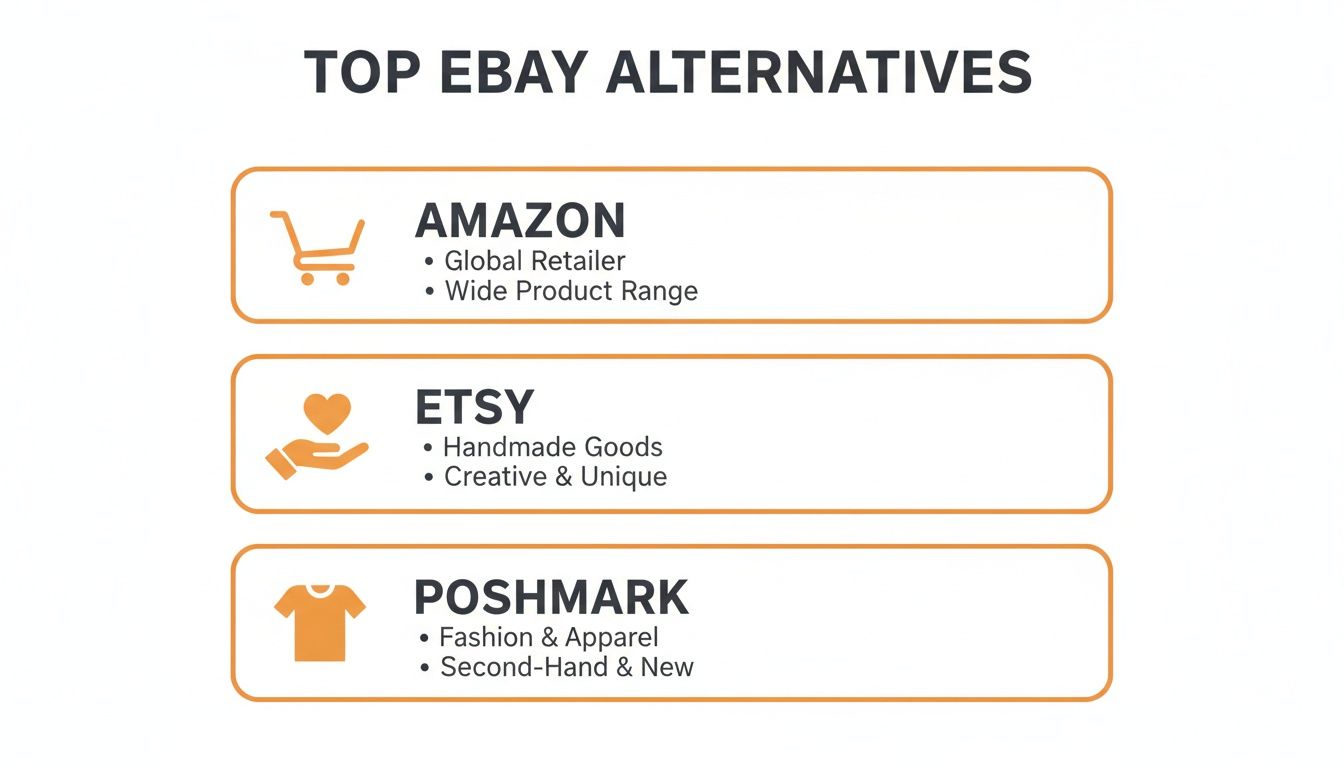
The takeaway is simple: the best platform is defined by what you sell. General retail products do well on Amazon, unique creations belong on Etsy, and fashion resells on Poshmark.
Tapping into High-Growth Regional Markets
Beyond product niches, significant opportunities exist in regional marketplaces, especially in fast-growing economies like Southeast Asia. For sellers based in the US or Europe, these platforms can be a gateway to new markets full of digital consumers.
These aren't just smaller versions of eBay or Amazon. Regional leaders like Shopee and Lazada built their platforms for a mobile-first audience, incorporating social commerce and interactive features that drive high engagement.
In Southeast Asia, Shopee and Lazada have become dominant eBay alternatives, capturing a large market share with localized strategies. This region has 600 million digital consumers. The gross merchandise value (GMV) for e-commerce here is projected to reach US$230 billion by 2026—almost double what it was in 2021. Mobile commerce is dominant, with over 90% of online purchases made on smartphones.
Adapting Your Strategy for New Platforms
You cannot simply copy your Amazon or eBay strategy to a platform like Shopee and expect success. The audience is younger, mobile-focused, and enjoys interactive content. To succeed, you must adapt your approach.
Here are the key areas to adjust:
Embrace Mobile-First Content: Your product images and descriptions must be sharp and clear on a small screen. Use short, direct text and impactful visuals that stand out on a phone.
Lean into Interactive Features: Shopee and Lazada have built-in tools like live-stream selling ("Shopee Live") and in-app games. Using these features is essential for driving visibility and sales.
Localize Everything: Do not just run your listings through a basic translator. Adapt your marketing to reflect local culture, holidays, and payment methods. Offering customer support in the local language is essential.
For sellers using a print-on-demand model, adapting these strategies is crucial. The core principles of targeting and content still apply. You can check out our guide on succeeding with print-on-demand on Amazon for foundational knowledge that can be adapted to these regional platforms.
By expanding your search beyond the usual suspects, you can find an alternative for ebay that offers a more targeted audience, less competition, and significant room for growth. Whether it’s a niche community or a booming regional platform, the right marketplace can become a powerful new engine for your business.
When to Build Your Own Shopify Store

Selling on a marketplace like Amazon or Etsy is like renting a retail space. You have a built-in audience, but you operate within someone else's rules. Building your own store on a platform like Shopify is different. It's about establishing your own central hub that you own and control completely.
This is the difference between being a tenant and a property owner. You stop competing for shelf space and start building your own flagship store. It’s the foundation of a direct-to-consumer (D2C) model, creating a direct line to your customers without an intermediary taking a fee or controlling the relationship.
Gaining Control and Building a Brand
The single biggest reason to launch your own Shopify store is total brand control. On a marketplace, your brand is often lost in a standardized template that makes you look like your competitors. A Shopify store is your canvas. You can create a unique experience that reflects your brand's personality and values.
This means you get:
Complete design freedom: You control the entire look and feel—the colors, the layout, the navigation. It's your vision, not a template.
Direct customer communication: You own your customer list. This is a huge advantage. You can run email campaigns, create loyalty programs, and get direct feedback without a marketplace’s restrictions.
Unrestricted storytelling: Your website becomes the home for your brand story. Use blogs, detailed 'About Us' pages, and high-quality visuals to connect with customers on a deeper level.
Owning your store means you are building a valuable business asset. Every customer you acquire and every bit of brand recognition you build contributes directly to your company's long-term value, not the marketplace's.
The Realistic Costs and Effort Involved
This level of control comes with more responsibility. Marketplaces bring the traffic; with a Shopify store, you must generate it yourself. This is the key difference many sellers overlook. Your success depends entirely on your ability to market your own store.
Here’s a realistic look at what it takes:
Financial Costs: You’ll have a monthly subscription fee for Shopify, with plans typically starting around $39 per month in the US. You should also budget for any premium themes or specialized apps you need.
Marketing Budget: This is often the largest ongoing expense. You need a dedicated budget for activities like social media ads, Google Shopping campaigns, content marketing, and SEO just to bring visitors to your site.
Time and Labor: Setting up the store is just the beginning. The real work is in the day-to-day: managing orders, handling all customer service directly, updating the site, and executing your marketing plan.
Building a Shopify store is a strategic decision for sellers ready to invest in a long-term brand. It's the right move when you have a clear vision, a plan to attract customers, and the resources to execute it. It's the ultimate alternative for ebay for those who want to build a business, not just sell products.
How to Optimise Listings for Multiple Platforms
Listing your products on a new platform is just the first step. The real work is in optimization. You cannot simply copy and paste your eBay titles and descriptions to Amazon, Etsy, or Walmart and expect results.
Every marketplace has its own search algorithm and customer expectations. The key is to understand the buyer on that specific platform. Your goal is to turn a product page into a sales tool that speaks their language and answers their questions.
Think Like a Customer, Not an Algorithm
The basis of smart cross-platform optimization is simple: answer the customer's question before they have to ask it. This has always been good practice, but with the rise of AI assistants, it's now essential. These systems are designed to understand and answer conversational questions, and your listings need to provide those answers.
Stop listing features; start selling benefits. Instead of a technical detail like "Water-resistant coating," frame it as a solution: "Keeps your gear dry in unexpected rain." One is a fact; the other solves a problem. That is what connects with a person and what an AI assistant will look for to match a query.
The best place to find these questions and this language is in your customer reviews—and your competitors'. What questions appear repeatedly? What benefits do people mention? What are their frustrations? This is your research material. Use their exact words in your titles and descriptions. You can learn more with our guide on finding the right product keywords to build a solid foundation.
Customise Content for Each Platform
The temptation to use one product description for all platforms is strong, but it's a losing strategy. The way you structure a title for Amazon's algorithm is completely different from how you'd write one for Etsy's discovery-focused buyers.
Here’s a practical breakdown:
Amazon: Your titles need to be full of keywords and very descriptive. A successful formula is often: Brand + Product Type + Key Feature 1 + Key Feature 2 + Size/Colour. The goal is to give the algorithm as much relevant information as possible.
Etsy: Forget the formula. Here, you need to connect with a buyer's creative and emotional side. Titles should be descriptive and highlight what makes your product special. For example: "Handmade Rustic Leather Journal | Perfect Gift for Writers."
Facebook Marketplace: Keep it simple and direct. This is about local search. A title like "Used Oak Dining Table with 4 Chairs" is more effective than a keyword-stuffed alternative that looks like spam.
When you sell across multiple channels, consistent operations are just as important as customized content. To streamline operations, a comprehensive eBay and Shopify integration guide can provide valuable strategies for keeping everything in sync.
This becomes even more important on regional platforms. For example, in Vietnam's e-commerce market, local platforms like Tiki and Shopee are becoming powerful eBay alternatives. The market there reached US$25 billion in 2024 and is on track to hit US$28 billion by 2025. For a brand selling on Amazon, this might mean adapting to Tiki's AI-driven search, especially in a market where mobile usage is over 88.9% and drives more than 90% of all transactions. You can learn more about how these platforms are reshaping the e-commerce sector in Vietnam.
Now, let's move from theory to action. You've seen the alternatives, so it's time to build a smart, repeatable plan for expanding beyond eBay.
This is not about a risky overhaul of your business. It's a step-by-step process to test new channels, measure results, and scale what works—without disrupting your current operations.
We’re breaking this down into a simple, four-step playbook. This is how you move from analysis to action and build a more stable e-commerce business.
Step 1: Audit Your Current Operation
Before adding a new channel, you need to be honest about what's working now. Analyze your sales data. Who are your best customers? Which products are actually driving profit, not just revenue?
This is about establishing a performance baseline. You must know your numbers. Figure out which products are your top performers and which are just creating extra work. This information will guide your next decisions.
Step 2: Pick One or Two High-Potential Channels
Resist the urge to launch on five new platforms at once. This is a common mistake that leads to burnout. Spreading yourself too thin is a recipe for failure.
Instead, use the data from Step 1 to make a strategic choice. Pick just one or two marketplaces that are a natural fit for your products.
Selling unique handmade goods? Etsy is the logical next step.
Moving high-volume, new products? Your focus should be on Amazon or Walmart Marketplace.
Selling secondhand fashion? Platforms like Poshmark or Mercari were built for you.
The goal here is a strategic decision, not a guess. Go where an audience is already looking for what you sell. This focus dramatically improves your chances of seeing a quick return.
Step 3: Run a Small, Controlled Pilot Test
Never go all-in on a new channel on day one. Start with a small, manageable pilot test to learn the platform's specifics without risking your business.
Choose a small batch of your proven bestsellers—perhaps 5 to 10 products—and get them listed. This is your learning phase.
Pay close attention to the listing process, fee structure, and customer service expectations. Track everything: How much traffic are the listings getting? Are they converting to sales? What is your actual profit margin after all fees? This small-scale experiment provides valuable, real-world data you can’t get from a blog post.
Step 4: Build a Repeatable System
Once your pilot test shows the channel is worthwhile, it’s time to formalize your process. Document everything you learned.
Create a simple, step-by-step workflow for listing new items, managing inventory across platforms, fulfilling orders, and tracking key performance indicators on this new channel. This system turns a one-time project into a scalable part of your business strategy. It’s how you grow without the chaos.
Frequently Asked Questions
Here are straightforward answers to common questions from sellers looking to move beyond eBay.
What Is the Best eBay Alternative for Selling Used Electronics?
For used electronics, your two best options are Mercari and Facebook Marketplace. Mercari's listing process is very simple, and it attracts a large audience looking for consumer goods. You can get started in minutes.
Facebook Marketplace's main advantage is its social network and local pickup option. This is great for bulky or delicate electronics, as it helps you avoid shipping costs and potential damage. While Amazon Renewed exists, its approval process is difficult. For most sellers, Mercari is the more practical starting point.
How Do I Manage Inventory Across Multiple Marketplaces?
The only effective way to manage inventory across multiple channels is with specialized software. Trying to do it manually with a spreadsheet is a recipe for failure.
Tools like Sellbrite, Linnworks, or ChannelAdvisor are designed for this purpose. When a product sells on one site, the software automatically updates your stock levels on all other platforms. This prevents overselling, which can damage your seller ratings and customer trust.
Is It Cheaper to Sell on Etsy or eBay?
The answer depends on what you sell and its price.
Etsy has a relatively simple fee structure: a listing fee, a transaction fee, and a payment processing fee. eBay’s fee system is more complex, with insertion fees and a final value fee charged on the total sale price and the shipping cost.
For handmade or vintage goods with a lower price, Etsy is almost always cheaper. For higher-priced items or products outside Etsy’s niche, eBay can be more cost-effective. You need to calculate the costs for each specific product to know for sure.
Can I Use Shopify as a Direct eBay Alternative?
No. It is a mistake to think of them as interchangeable. They serve completely different roles in your e-commerce strategy.
Shopify provides the tools to build your own standalone website. It’s your brand and your store. But you are 100% responsible for generating all your traffic through marketing. eBay is a marketplace with a huge, built-in audience of buyers actively searching for products.
The smartest sellers don't choose one over the other; they use both. Your Shopify store serves as your brand's headquarters, while marketplaces like eBay or Amazon act as additional sales channels, reaching customers you might not find on your own.
Ready to stop guessing how Amazon's AI sees your products? Cosmy analyses your listings against real-time signals from Amazon's generative shopping assistant, revealing exactly what to fix for higher visibility and sales. Get your free, actionable content audit today and turn AI into your competitive advantage. Start optimising with confidence at https://cosmy.ai.